If you’ve been trying to follow what’s happening in education in Vermont, you’re not alone in feeling that a lot is moving at once.
Over the past several months, the conversation around education has centered on three big issues: cost, outcomes, and reform. Vermont is currently in the middle of implementing Act 73, the major education reform law passed in 2025. The law launched a multi-year effort to rethink how the state governs and funds public education, including a path toward larger school districts and changes to the statewide education tax structure.
The push for reform didn’t appear overnight. It grew out of several pressures that have been building for years. Vermont spends among the highest amounts per student in the country, enrollment has steadily declined across many communities, and property taxes tied to education have risen sharply. Together, those trends have led lawmakers and families alike to ask whether the system needs to evolve.
What we’re seeing now is the shift from broad reform ideas to real decisions about how the system should operate going forward.
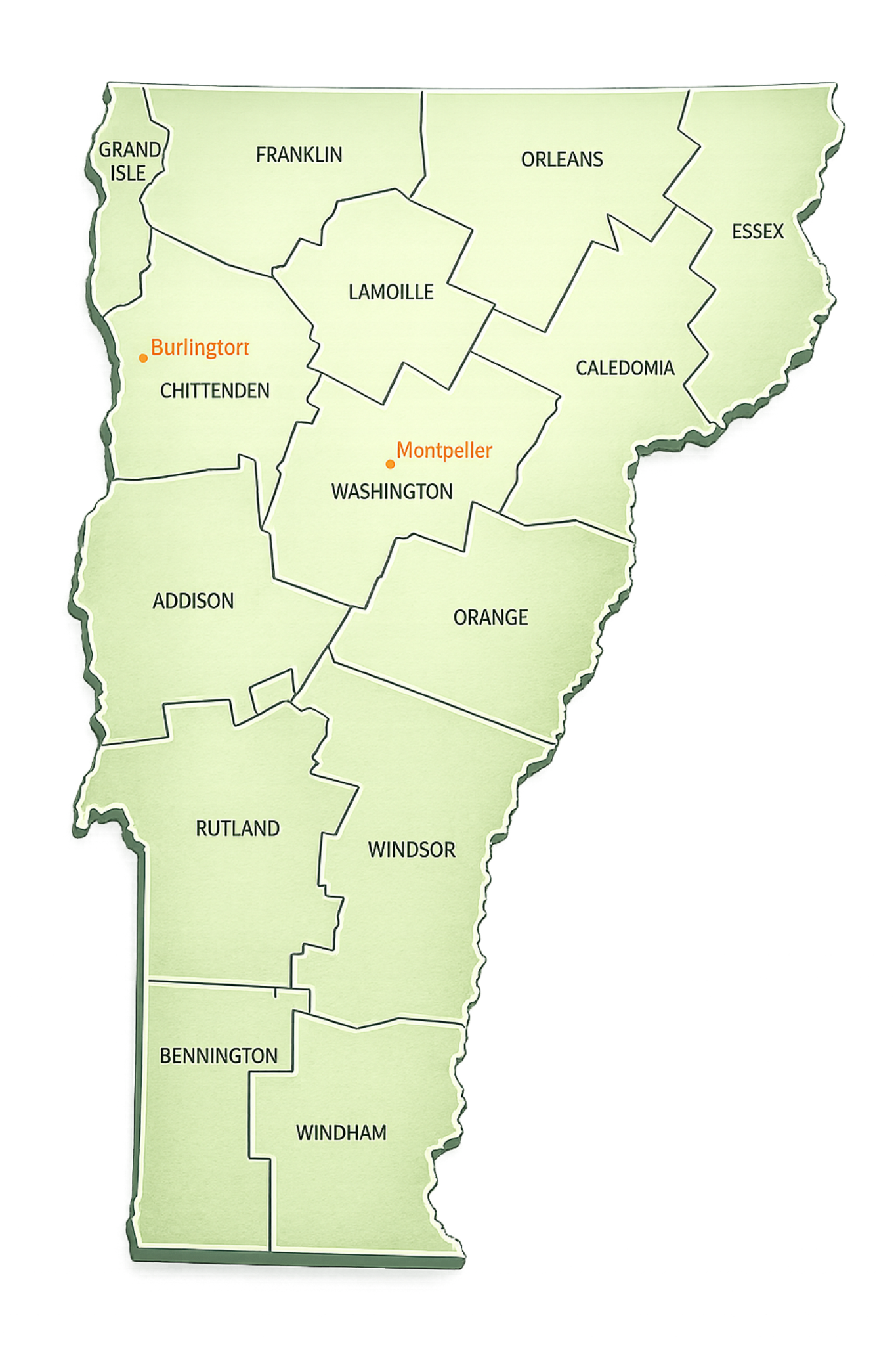
In recent weeks, lawmakers have been debating how district consolidation should actually happen under Act 73. One proposal discussed in the House would combine Vermont’s 119 school districts into roughly 27 supervisory districts. A proposal discussed in the Senate would take a different approach, giving districts a two-year window to pursue voluntary mergers before the state considers stronger steps if consolidation does not occur.
Both proposals are attempting to carry out the goals of Act 73, but they reflect different philosophies about how much authority should remain at the local level and how uniform Vermont’s education system should become. Those debates are likely to continue throughout the legislative session as policymakers try to balance cost control, governance, and community voice.
While lawmakers debate structure, the pressure families feel around affordability hasn’t gone away.
Education property taxes have risen significantly in recent years, and many districts continue to face budget challenges. One major factor this year has been the rising cost of health insurance, which has increased sharply across several consecutive budget cycles.
Town Meeting Day school budget votes in March reflected that tension. Most budgets ultimately passed, but not all. Several districts saw budgets rejected or sent back for reconsideration, a reminder that communities are still struggling to balance maintaining services with keeping taxes manageable.
In other words, cost pressures remain one of the central forces shaping the reform conversation.
At the same time, the most recent release of statewide assessment data from the Vermont Agency of Education has raised continued questions about student outcomes.
According to the latest statewide results, English language arts proficiency ranged roughly between 46% and 61% depending on grade level. Math proficiency ranged between 33% and 48%, and science proficiency ranged between 41% and 45%.
The state also reported that fewer than 60% of Vermont seniors demonstrated proficiency on at least one college- or career-readiness assessment, and only about 46% of graduates enrolled in post-secondary education within sixteen months, compared with a statewide goal of 80%.
These numbers do not tell the entire story about Vermont schools. Many districts are doing remarkable work and educators across the state remain deeply committed to their students. But the results do reinforce a question many families have been asking: if costs are rising and outcomes remain uneven, what improvements should the system be aiming for?
Taken together, these developments illustrate the moment Vermont finds itself in.
The state is trying to manage several significant forces at the same time. Costs continue to rise and property taxes remain a concern for many households. Enrollment has declined across much of the state. Governance structures have become increasingly complex. And families are paying close attention to academic outcomes.
None of these issues developed overnight, and none will be solved overnight either.
What is clear, however, is that the conversation about reform is no longer theoretical. The decisions being debated now will shape how Vermont’s education system operates for years to come.
Education is one of the most important public responsibilities Vermont holds. Communities depend on strong public schools, and families depend on a system that provides real opportunity for their children.
At the same time, the system must remain affordable, transparent, and responsive to the people it serves.
The reform discussion now underway is ultimately about finding a path that balances those goals: preserving the public education institutions Vermonters value while addressing the structural challenges that have emerged over time.
It’s a conversation that will continue to unfold over the coming months and years, and it is one worth following closely.